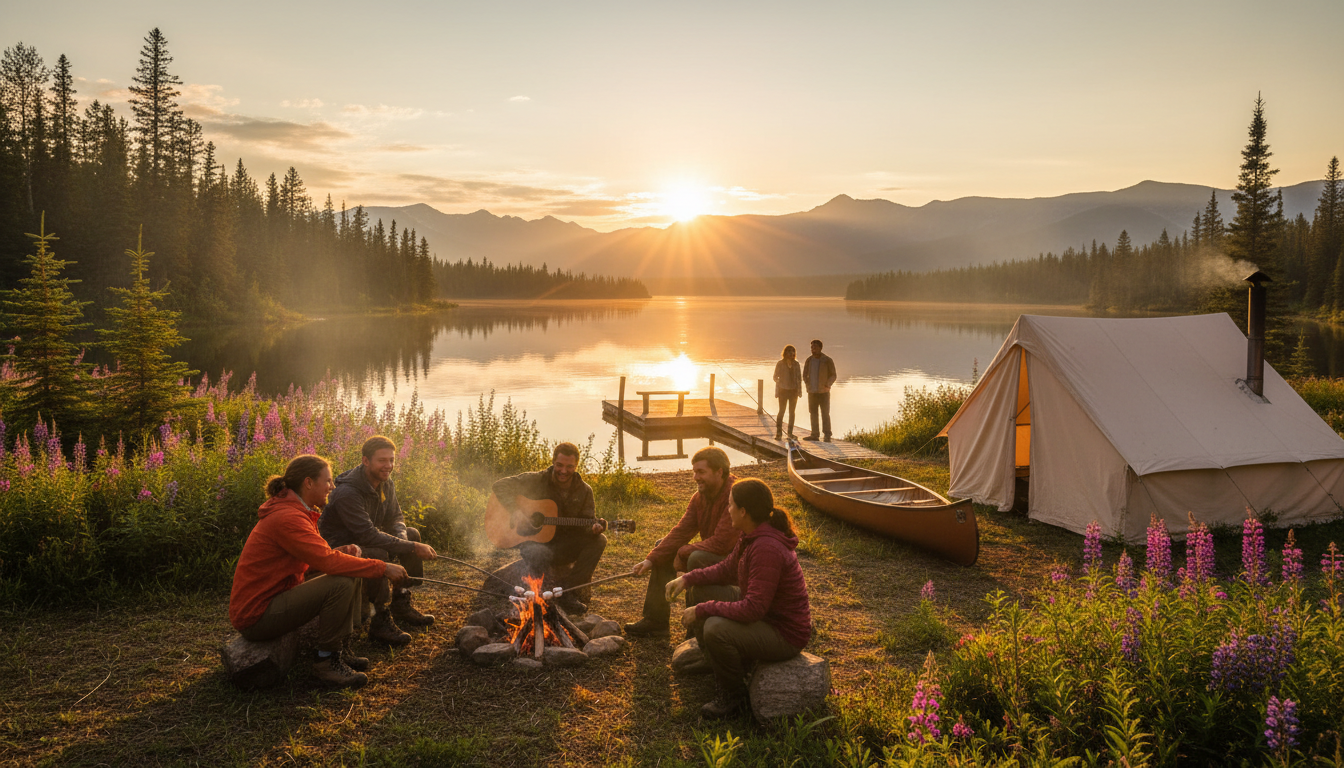
The two peaks
Summer runs mid-June to late August. Midnight sun peaks June 21 (Whitehorse gets 19 hours of daylight, Dawson gets 21). Trails open, rivers run, wildflowers hit in early July, temperatures sit at 15–22°C. Winter tourism runs late November through mid-March — this is aurora season. Best odds are on clear cold nights in February and March; nights are 14+ hours dark and forecasts (from the Aurora Forecast Yukon service) actually work. These are the two windows worth planning a trip around.
The shoulders — worth knowing
September: the sleeper hit. Tombstone larches turn gold in the first two weeks. Aurora starts by late month. Bugs die. Prices drop 30%. Late April/May: breakup season, muddy and quiet, not recommended unless you’re chasing photography. October: dead. Everything closes. April: dead. If you have flexibility, book the first two weeks of September — it is the single best time to be here and locals will tell you the same.
Month-by-month one-liners
January: brutal cold, best aurora, sub-$150 hotels. February: sled dog Yukon Quest, cold snaps to -40°C. March: aurora + returning light, ideal winter month. April: mud. May: waking up, some trails snowbound. June: solstice, everything opens. July: peak, book early. August: still summer, bugs fade. September: gold. October: closed. November: dark, aurora returns. December: aurora + shortest days (5 hours in Dawson).
Questions, answered
Hotels in Yukon
See all stays →Curated picks are coming — meanwhile, the live search covers every bookable property at the same price or better.